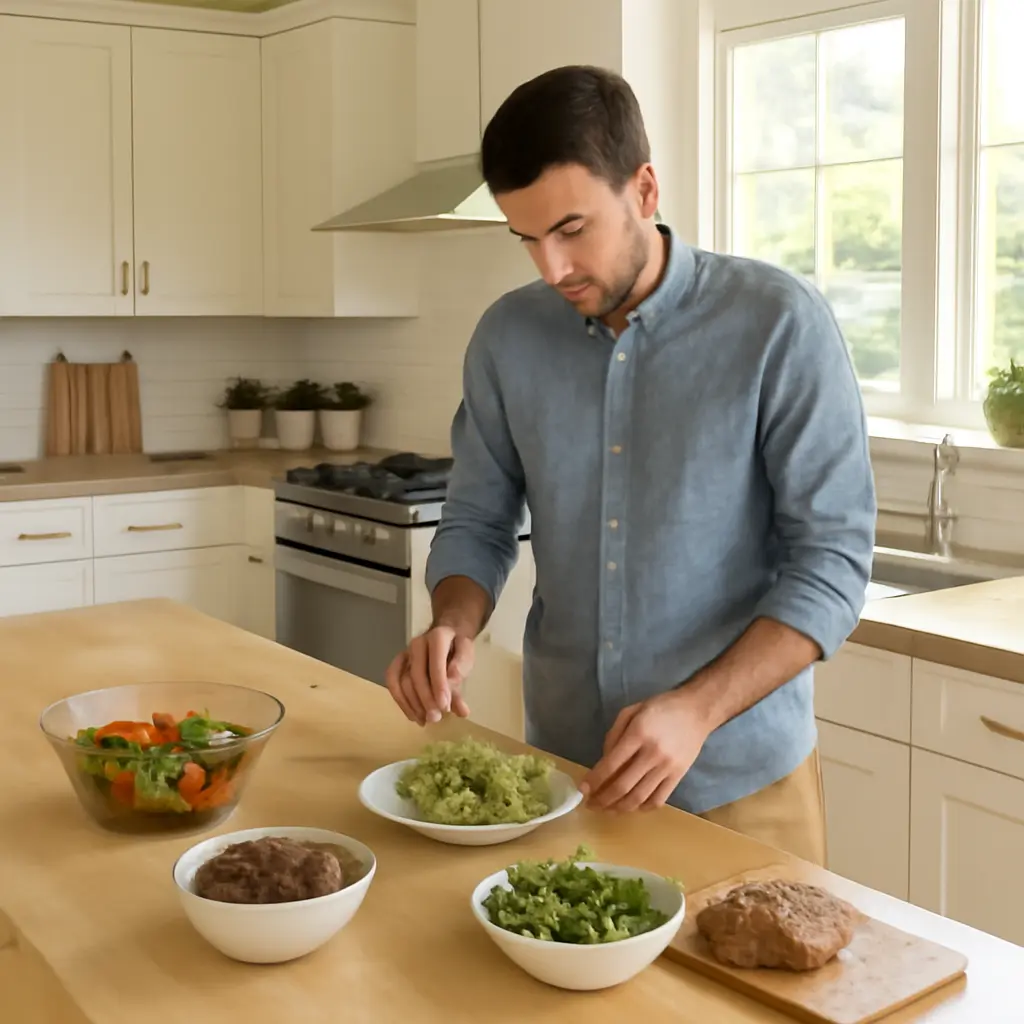
Eating better in 20 minutes or less means choosing quick meals and snacks that provide useful nutrients without requiring a lengthy cooking session. The Centers for Disease Control and Prevention (CDC) identifies fruits, vegetables, whole grains, protein foods, and dairy or fortified alternatives as the main food groups in a healthy eating pattern. Practical shortcuts—such as frozen vegetables, canned beans, whole-grain staples, and planned leftovers—can make those foods easier to combine on a busy day. This guide explains what a quick balanced meal looks like, how to assemble one, and how to save time while keeping food safe.
Quick balanced meals: defining the 20-minute approach
A quick balanced meal is a meal assembled or cooked in roughly 20 minutes or less that combines foods from several food groups, especially vegetables or fruit, a protein source, and a whole grain or other satisfying carbohydrate. It is a practical planning approach, not a formal nutrition term or guarantee that every meal meets every person’s needs. The CDC’s MyPlate guidance encourages people to include fruits, vegetables, grains, protein foods, and dairy or fortified soy alternatives across their eating pattern.
Time matters because meals compete with work, caregiving, commuting, and other daily demands. The U.S. Bureau of Labor Statistics’ American Time Use Survey documents how Americans divide their time among activities, including food preparation and cleanup. A short meal plan can help people make nutritious options more accessible when cooking time is limited. The key characteristics are simple ingredients, a few complementary food groups, and preparation steps that can happen together.
The plate method for fast meals
The plate method is a visual way to compose a meal: fill about half the plate with vegetables and fruit, one quarter with protein, and one quarter with grains, preferably whole grains. It is a planning aid rather than a rigid rule, and individual portions can vary according to appetite, health needs, and cultural food preferences. For a quick example, pair microwave-steamed vegetables with brown rice and canned beans, then add salsa, herbs, or a small amount of dressing for flavor.
Quick meals can use fresh, frozen, or canned foods
Convenience foods can support a nutritious meal when chosen thoughtfully. Frozen vegetables and fruit can be stored for later, while canned beans and fish are ready to use with little or no cooking. The U.S. Department of Agriculture (USDA) notes that canned and frozen produce can be nutritious options; compare labels when useful, since some canned products contain added sodium or syrup. Draining and rinsing canned beans can reduce some of their sodium.
Fast meal combinations: putting the 20-minute approach into practice
Once the basic meal pattern is clear, the next step is matching ingredients to the time available. These combinations are examples rather than prescribed menus; adjust them to dietary needs, available equipment, budget, and taste. For the shortest preparation, choose ingredients that are already cooked or need only brief heating.
No-cook meals and snacks
No-cook meals use ready-to-eat ingredients, making them useful when there is no time to turn on the stove. Combine canned tuna or rinsed chickpeas with bagged salad, whole-grain bread, and fruit. Another option is plain yogurt with oats, fruit, and nuts or seeds. The Food and Drug Administration (FDA) advises checking food labels for information such as serving size, added sugars, and sodium when comparing packaged choices.
Microwave and one-pan meals
Microwave meals can be balanced by adding a vegetable and a protein source to a convenient grain or leftover. For example, microwave a potato and top it with beans, vegetables, and plain yogurt. A one-pan meal can be made by quickly sautéing pre-cut vegetables with eggs, tofu, or fully cooked chicken and serving the mixture with whole-grain toast or a microwaveable grain. Cooking times depend on equipment and ingredient size, so check that foods are cooked thoroughly.
Fast meals built from leftovers
Leftovers reduce the amount of work required at the next meal. Turn cooked grains and vegetables into a bowl with beans, eggs, or leftover meat; or tuck leftover vegetables and protein into a whole-grain wrap. Store leftovers promptly in shallow containers and refrigerate them. USDA food-safety guidance says most cooked leftovers should be used within three to four days when refrigerated at 40°F (4°C) or below.
Time-saving food preparation: planning, shortcuts, and safety
The most reliable way to make a meal fit a short window is to reduce decisions and preparation before the clock starts. A small set of versatile staples can become different meals throughout the week. Planning does not need to mean cooking every meal in advance: washing produce, keeping quick proteins on hand, or cooking extra grains can also shorten weekday preparation.
A short shopping and prep routine
Choose ingredients that work in more than one combination: eggs, beans, frozen vegetables, fruit, whole-grain bread, oats, canned fish, and a quick-cooking grain. Before shopping, check what is already in the pantry and plan a few pairings rather than a rigid schedule. If preparing food ahead, keep raw ingredients separate from ready-to-eat foods and refrigerate perishable items promptly.
Food safety still matters when time is short
Fast preparation should not mean skipping safe handling. The FDA’s food-safety guidance emphasizes cleaning, separating raw foods from ready-to-eat foods, cooking to safe temperatures, and chilling perishable foods promptly. Use a food thermometer for foods that require temperature verification, and follow package directions for frozen or prepared products. These habits help reduce foodborne-illness risks without adding much active cooking time.
Conclusion: making better eating practical in 20 minutes or less
Quick balanced meals rely on a simple pattern: combine produce, protein, and a satisfying grain or other carbohydrate; use convenient ingredients strategically; and make leftovers and planning work in your favor. No-cook combinations, microwave and one-pan meals, and leftover-based dishes can all fit a short schedule. Choose one or two staples to keep ready this week, build a meal around them, and use food-safety guidance when storing or reheating food. For further ideas, explore the CDC’s MyPlate resources and USDA’s food-safety guidance.
Sources: Centers for Disease Control and Prevention, Healthy Eating for a Healthy Weight, https://www.cdc.gov/healthy-weight-growth/healthy-eating/; USDA MyPlate, What Is MyPlate?, https://www.myplate.gov/eat-healthy/what-is-myplate; U.S. Bureau of Labor Statistics, American Time Use Survey, https://www.bls.gov/tus/; U.S. Department of Agriculture, MyPlate, Fruits and Vegetables, https://www.myplate.gov/eat-healthy/fruits; U.S. Food and Drug Administration, How to Understand and Use the Nutrition Facts Label, https://www.fda.gov/food/nutrition-facts-label/how-understand-and-use-nutrition-facts-label; USDA Food Safety and Inspection Service, Leftovers and Food Safety, https://www.fsis.usda.gov/food-safety/safe-food-handling-and-preparation/food-safety-basics/leftovers-and-food-safety; U.S. Food and Drug Administration, Food Safety at Home, https://www.fda.gov/consumers/consumer-updates/food-safety-home