Your physical environment—the spaces, sensory conditions, and objects around you—can influence attention, stress, mood, sleep, and social connection. Research links access to nature and daylight with aspects of well-being, while noise, crowding, and poor housing conditions can add stress or disrupt rest. These effects are not identical for everyone: personal needs, culture, health, and circumstances matter. Understanding how light, sound, nature, layout, and air quality shape mental states can help people make practical changes at home, work, and in shared spaces.
Physical environment and mental state: how surroundings shape well-being
A physical environment is the built or natural setting in which people live, work, learn, and spend time. The World Health Organization (WHO) describes health as encompassing mental and social well-being, not merely the absence of disease; in that broad sense, environmental conditions can be relevant to both everyday functioning and public health. The WHO estimates that nearly one in eight people worldwide lived with a mental disorder in 2019, a figure that underscores the importance of supportive conditions while not implying that surroundings alone cause or prevent mental illness.
Environmental psychology studies how people and settings affect one another. Its concerns include sensory conditions such as noise and light, features such as crowding and privacy, and restorative resources such as parks. Research does not mean that every person will react in the same way or that a single design change treats a mental health condition. It does show why environments deserve attention alongside individual, social, and clinical factors.
Environmental conditions influence mental state through sensory load and restoration
Environmental psychologist Roger S. Ulrich’s influential research describes how aspects of a setting can support stress recovery. In a 1984 study published in Science, patients recovering from gallbladder surgery whose hospital-room windows faced trees had, on average, shorter hospital stays and fewer negative medical-record comments than patients whose windows faced a brick wall. The finding is a notable example of an association in a specific clinical setting—not proof that a view alone produces the same outcome for everyone.
Related environmental influences can be grouped into sensory exposures, spatial conditions, and restorative features. These categories overlap: a quiet, well-lit room may also provide privacy, while a nearby park can offer daylight, movement, and opportunities for social contact.
Light and daily rhythms
Light is visible environmental input that affects vision and helps coordinate the body’s circadian system, which regulates roughly 24-hour patterns such as sleep and alertness. Daylight exposure during the day and lower, less stimulating light in the evening can support a more consistent sleep–wake routine, though individual schedules and health conditions influence responses. The Centers for Disease Control and Prevention (CDC) recommends regular sleep habits and a bedroom environment conducive to sleep; light management is one practical part of that environment.
At work or school, access to daylight and views may make a space feel more comfortable, but evidence about specific mental-health outcomes varies by study. A practical approach is to use daylight where possible, reduce glare, and avoid bright light that interferes with bedtime routines.
Noise and sensory overload
Noise is unwanted or disruptive sound, and its mental effects can include distraction, irritation, and difficulty relaxing. The WHO’s Environmental Noise Guidelines for the European Region identify transport noise as a public-health concern and recommend reducing exposure, particularly at night. Noise can also interrupt sleep, which is closely connected to mood and concentration. Responses differ: a sound that one person finds distracting may be neutral or comforting to another.
Useful interventions include sealing gaps around windows, using soft furnishings to reduce reverberation, setting quiet periods, and choosing a quieter workspace for demanding tasks. Where persistent noise comes from traffic or building systems, individual coping measures may help, but source-level and community-level changes are often more effective.
Air quality and thermal comfort
Indoor environmental quality includes ventilation, pollutants, temperature, and humidity. These conditions can affect physical comfort and the ability to concentrate; poor air quality may also aggravate respiratory symptoms, which can indirectly affect well-being. The U.S. Environmental Protection Agency (EPA) notes that people spend a substantial amount of time indoors and that indoor pollutant concentrations can sometimes be higher than outdoor levels, depending on sources and ventilation.
Maintaining appliances, controlling moisture, avoiding indoor smoking, and following safe ventilation guidance can improve the indoor environment. Comfort is personal, so adjustable temperature and access to fresh air may be especially valuable in shared rooms.
Spatial design and nature support focus, control, and restoration
Sensory conditions are only part of the picture. The arrangement of a space can affect privacy, autonomy, movement, and social interaction, while natural settings can offer a different kind of attention and respite. Together, these features help explain why the same room may feel supportive to one person and stressful to another.
Crowding, privacy, and personal control
Crowding is the subjective experience that available space or privacy is insufficient; it is not simply a head count. Limited control over noise, interruptions, or personal space can make concentration and relaxation harder. The American Psychological Association’s discussions of stress emphasize that stress depends partly on how people appraise demands and their ability to respond, which helps explain why the same crowded setting can affect people differently.
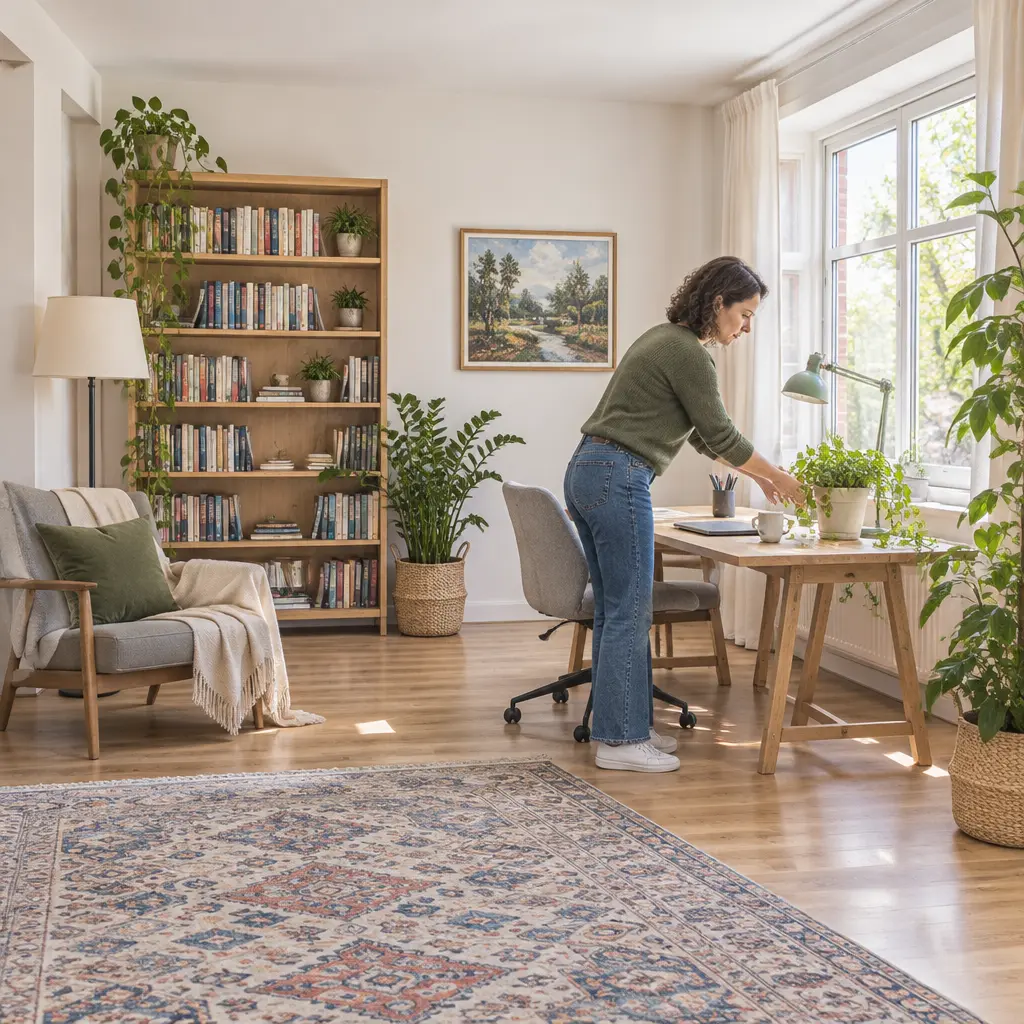
Design features such as quiet rooms, movable partitions, clear circulation routes, and choice between social and private areas can increase perceived control. In homes, even a small defined area for rest or focused work may help separate activities, provided it is feasible for the household.
Nature, green space, and restorative attention
Nature exposure includes contact with vegetation, parks, gardens, water, and views of natural features. A 2019 systematic review and meta-analysis by Mathew P. White and colleagues, published in Environment International, examined associations between time in nature and health and well-being. The review found evidence of benefits across several outcomes, while also noting variation in study designs and the need for caution about causal claims.
Green space can provide opportunities for walking, restoration, and social contact, but access is uneven. The WHO’s urban green-space guidance highlights the importance of accessible, usable green areas in cities. A neighborhood park, a community garden, or a few indoor plants may offer contact with nature, though these options are not interchangeable and may not address barriers such as safety, disability access, or lack of time.
Layout, movement, and social connection
Layout describes how rooms, paths, and shared areas are arranged. Clear routes and usable common spaces can support movement and make social interaction easier, while confusing or inaccessible layouts can add friction to daily tasks. The CDC identifies physical activity as beneficial to health, including mental health; environments that make walking and routine movement practical can therefore support a health-promoting behavior.
Shared spaces work best when they offer both opportunities to connect and the option to withdraw. For example, a workplace can combine collaborative tables with quieter rooms, while a residential building can provide welcoming common areas alongside private homes.
Real-world applications turn environmental evidence into practical choices
Environmental improvements can be modest or structural. A person may adjust a desk, reduce evening light, or take a regular walk; a landlord, employer, school, or city can address ventilation, acoustics, accessibility, and green-space provision. The most useful intervention depends on the source of strain and on who has the ability to change it.
At home
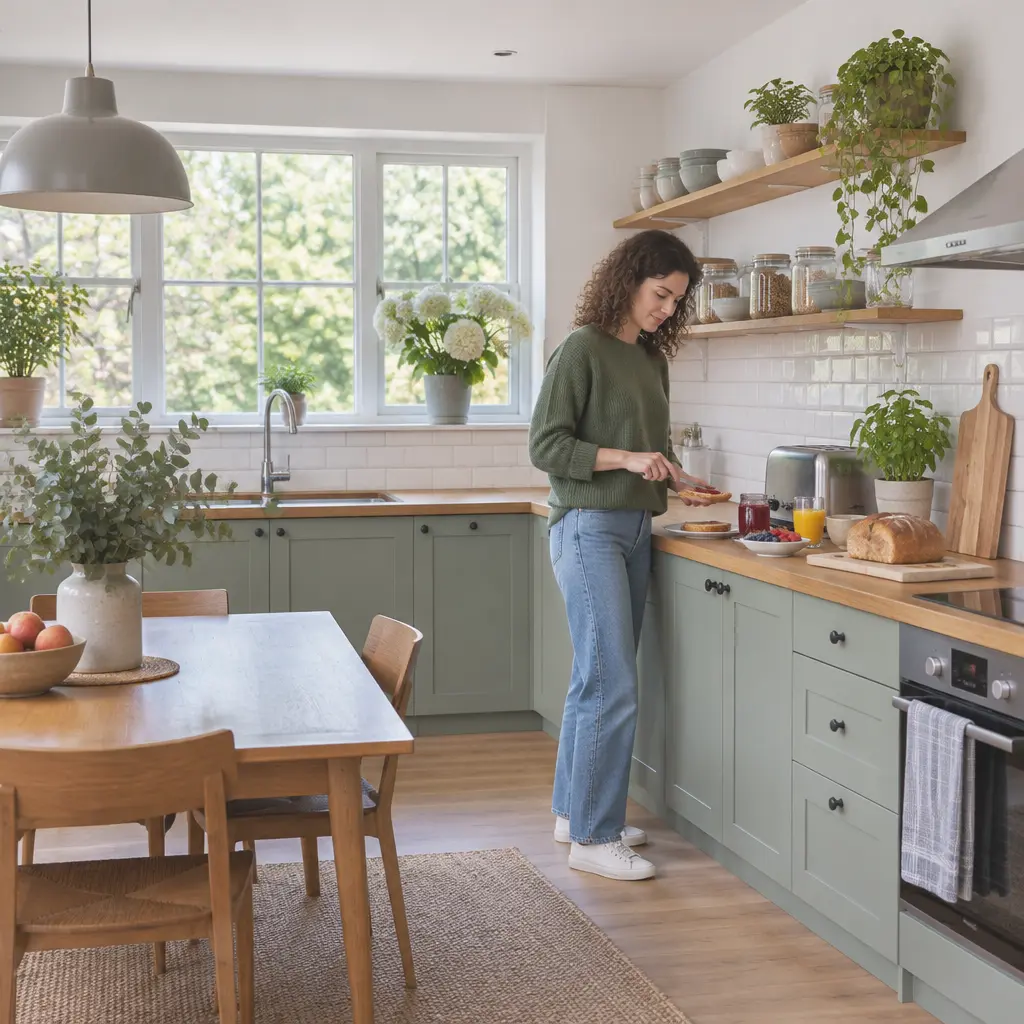
A supportive home environment can prioritize restful sleep, comfortable temperature, manageable noise, and a sense of personal control. Practical steps include creating a consistent sleep area, keeping work materials out of the bedroom when possible, checking for dampness or ventilation problems, and arranging a small spot for quiet or focused activity. These measures may improve comfort, but persistent distress or sleep problems can require professional assessment rather than environmental changes alone.
At work and school
Organizations can reduce avoidable environmental demands by providing adequate lighting, maintaining clean air systems, limiting unnecessary noise, and offering spaces for both collaboration and focused work. The WELL Building Standard, developed by the International WELL Building Institute, is one example of a framework that organizes building strategies around features such as air, light, comfort, and sound. Certification or design standards do not guarantee mental-health outcomes, but they can help teams assess building conditions systematically.
In neighborhoods and cities
Urban design can shape whether residents can reach parks, walk safely, find quiet, and access essential services. WHO guidance emphasizes that green space should be close, accessible, and designed for varied community needs. A city map comparing park access, tree cover, traffic noise, and walking routes could help identify underserved areas; such a visual should be interpreted alongside community input and disability-access information.
Conclusion: physical environment and mental state are connected, but context matters
Light, noise, air quality, crowding, layout, and nature can all influence how people sleep, focus, recover from stress, and connect with others. Research—from Ulrich’s hospital-window study to reviews of nature exposure—supports taking the physical setting seriously, while also reminding us that findings vary and do not establish a single cause or cure. Individual preferences, health, social conditions, and access shape what is helpful.
Start by noticing which environmental conditions support or drain your attention and mood, then make one feasible change. For larger problems, such as persistent noise, unsafe housing, or unequal access to green space, collective action and responsible building or planning decisions matter. Further reading from the WHO, CDC, and EPA can help individuals and organizations connect environmental improvements with broader health guidance.
Sources: World Health Organization, Mental disorders, https://www.who.int/news-room/fact-sheets/detail/mental-disorders; Roger S. Ulrich, View Through a Window May Influence Recovery from Surgery, Science, 1984, https://www.science.org/doi/10.1126/science.6143402; World Health Organization Regional Office for Europe, Environmental Noise Guidelines for the European Region, 2018, https://www.who.int/europe/publications/i/item/9789289053563; U.S. Environmental Protection Agency, Introduction to Indoor Air Quality, https://www.epa.gov/indoor-air-quality-iaq/introduction-indoor-air-quality; Centers for Disease Control and Prevention, About Sleep, https://www.cdc.gov/sleep/about/index.html; Mathew P. White et al., Spending at least 120 minutes a week in nature is associated with good health and wellbeing, Environment International, 2019, https://doi.org/10.1016/j.envint.2019.105083; World Health Organization Regional Office for Europe, Urban green spaces: a brief for action, 2017, https://www.who.int/europe/publications/i/item/9789289052498; American Psychological Association, Stress, https://www.apa.org/topics/stress; Centers for Disease Control and Prevention, Benefits of Physical Activity, https://www.cdc.gov/physical-activity-basics/benefits/index.html; International WELL Building Institute, WELL Building Standard, https://www.wellcertified.com/.