Fresh air and movement can shift your mood sooner than you might expect. A brief walk outdoors combines physical activity, daylight, and a change of surroundings—factors associated with improved mood and reduced feelings of stress. The effect is not a guaranteed cure or identical for everyone, but research suggests even short bouts of activity can help. This guide explains how outdoor movement may influence mood, what the evidence can and cannot establish, and how to build a safe, realistic routine.
Outdoor exercise and mood: how the combination works
Outdoor exercise means purposeful physical activity performed in an outdoor setting, from a neighborhood stroll to cycling or gardening. The National Institute for Health and Care Excellence (NICE) describes physical activity broadly as bodily movement that uses energy; it can include everyday activities as well as structured exercise. When activity takes place outdoors, it may also involve natural scenery, daylight, and a break from indoor routines.
The Centers for Disease Control and Prevention (CDC) recommends that adults work toward at least 150 minutes of moderate-intensity aerobic activity per week, alongside muscle-strengthening activity on two days. That is a long-term health target, not a requirement for experiencing a possible short-term mood lift: a manageable walk is a useful starting point. A 2018 systematic review in Environmental Science & Technology found that as little as five minutes of exercise in a natural environment was associated with improvements in mood and self-esteem across the studies it reviewed. The researchers also noted variation between studies, so the finding does not mean every person will feel better within five minutes.
Short-term mood and stress response
A short-term mood response is a change in how someone feels during or soon after activity. Walking may offer a mental pause, interrupt rumination, and create a sense of progress. Physical activity also affects brain systems involved in emotion and stress regulation, although no single biological explanation accounts for everyone’s experience. The CDC identifies immediate benefits of physical activity that can include reduced short-term feelings of anxiety and improved sleep quality.
Outdoor settings and nature contact
Nature contact is time spent noticing or engaging with natural features such as trees, water, gardens, or open skies. A 2019 study published in Scientific Reports found that people who reported spending at least 120 minutes a week in nature were more likely to report good health and well-being than those reporting no nature contact. This observational finding identifies an association, not proof that nature alone caused the difference, and the study did not establish a required weekly dose for everyone.
These overlapping influences help explain why an outdoor walk can feel different from a workout indoors. The next question is which kinds of movement are practical enough to repeat.
Walking and other outdoor activities that support a mood reset
Outdoor activities are forms of movement that can be adapted to a person’s fitness, access, and preferences. Walking is often an accessible option because it usually requires little equipment and can be adjusted by changing pace, route, or duration. The best choice is not necessarily the most strenuous one; a comfortable activity that fits daily life may be easier to sustain.
A brisk or easy walk
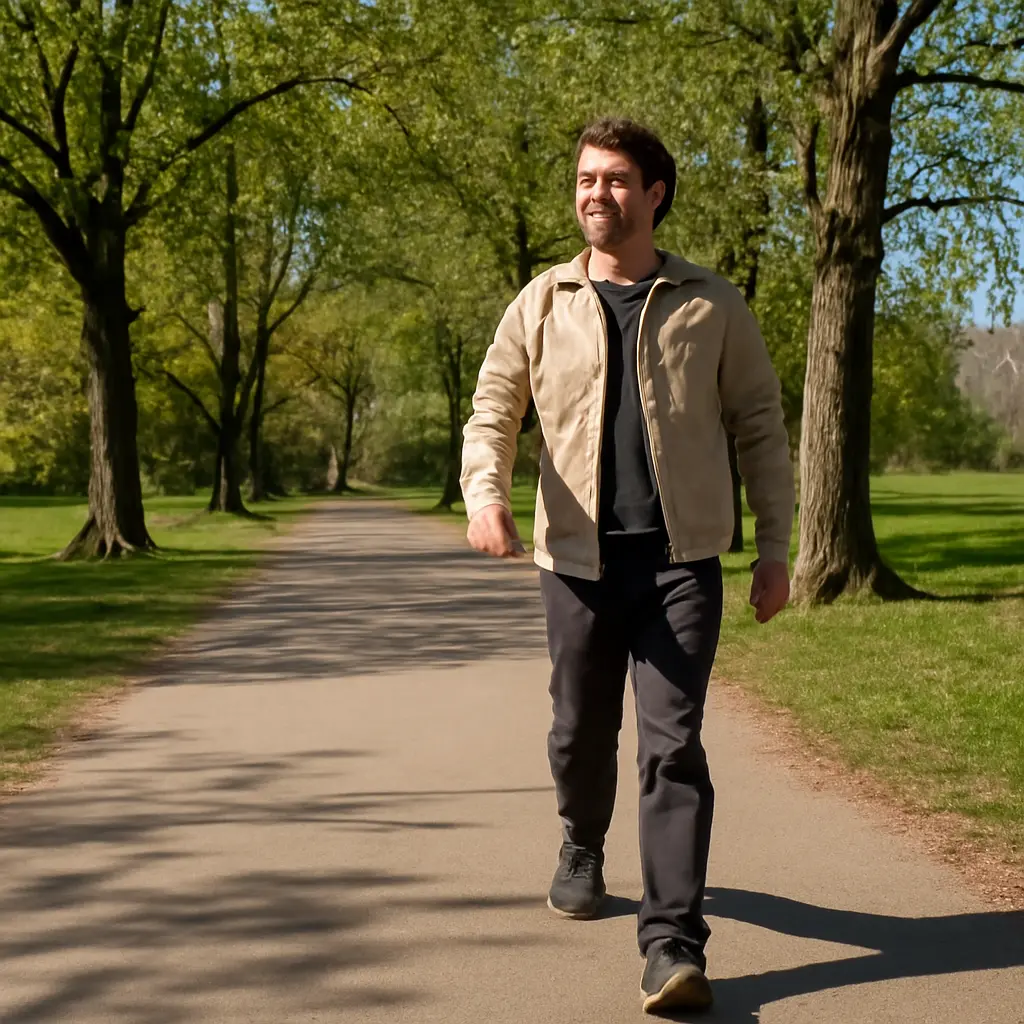
Walking ranges from a gentle stroll to a brisk pace that raises breathing and heart rate while still allowing conversation. For a quick reset, try a short, comfortable route and pay attention to the change in energy or tension afterward. A 2022 Cochrane review found that walking may reduce symptoms of depression compared with no treatment or control conditions, while emphasizing that the evidence and certainty varied. Walking can complement professional care; it should not replace treatment when someone needs it.
Gardening, cycling, and active errands
Gardening, cycling, and walking to a nearby destination are alternative ways to combine movement with time outdoors. Gardening can involve light-to-moderate effort, while cycling intensity depends on speed, terrain, and fitness. These activities can make movement feel purposeful rather than like a separate task. Choose a level that feels safe, and build duration or intensity gradually rather than pushing through pain, dizziness, or unusual shortness of breath.
A simple chart for choosing a starting point
The following comparison is a practical guide, not a clinical ranking. Mood effects vary, and the safest activity depends on health, surroundings, and personal preference.
- Easy walk: low barrier to entry; useful for a gentle break or beginners.
- Brisk walk: raises effort while remaining accessible to many people; adjust pace to comfort.
- Gardening: combines light movement and task-focused attention; adapt tools and posture as needed.
- Cycling: can provide sustained aerobic activity; use a helmet and choose a route suited to skill and traffic conditions.
Once an activity feels manageable, consistency matters more than chasing a dramatic, immediate transformation.
Daylight, routine, and realistic expectations
Daylight is light from the sun, and outdoor time often increases exposure to it. Light helps regulate the body’s circadian rhythm—the roughly 24-hour timing system that influences sleep and wakefulness. The National Institute of General Medical Sciences explains that circadian rhythms respond to environmental cues, including light and darkness. This does not mean a sunny walk will reliably treat low mood or sleep problems, but daylight and a regular activity routine may be useful parts of a broader well-being plan.
Why expectations should stay measured
Research on exercise, nature, and mood includes experiments, observational studies, and reviews with differing methods. People’s responses can depend on health, weather, access to green space, social context, and starting mood. A brief walk may help someone feel more settled or energized; it may also produce no noticeable change on a particular day. Persistent sadness, loss of interest, or anxiety that interferes with daily life deserves attention from a qualified health professional.
Making outdoor movement a repeatable habit
A repeatable habit is an activity linked to a realistic cue and schedule. For example, take a ten-minute walk after lunch, walk with a friend on certain days, or get off public transit one stop earlier when conditions allow. Start with a duration that feels achievable, then add time gradually. The CDC’s weekly activity recommendation can serve as a longer-term guide, but any increase from a low baseline can be a constructive step.
Safety and access make the mood benefit more practical
A useful outdoor routine must fit the person and the environment. Select routes with safe crossings and suitable surfaces, check weather and air-quality conditions, wear visible clothing when needed, and bring water in heat. In cold or wet weather, use appropriate layers and footwear. People with chronic conditions, mobility limitations, or concerns about starting exercise can ask a health professional about safe options; indoor movement is a valid alternative when outdoor conditions or access are poor.
Access to parks, sidewalks, and safe public spaces is not evenly distributed. The World Health Organization’s guidance on physical activity and sedentary behaviour emphasizes that opportunities for activity are shaped by environments as well as individual choices. A nearby street, courtyard, school track, or community garden may be a more realistic option than a large park, and movement indoors still counts toward physical activity.
Conclusion: use fresh air and fitness as a small, evidence-informed reset
Outdoor exercise brings together movement, a change of setting, and often daylight—elements associated with short-term mood and well-being benefits. Evidence includes reported improvements after brief activity in natural settings, associations between nature exposure and well-being, and research on walking and depressive symptoms. These findings support trying a comfortable outdoor activity, while leaving room for individual differences and acknowledging that exercise is not a substitute for needed mental-health care.
Choose one safe, enjoyable activity and try it consistently for a week, noticing how you feel before and afterward. If low mood or anxiety persists, consider speaking with a qualified professional. Small steps can contribute to a healthier routine, even when they do not transform your mood every time.
Sources: Centers for Disease Control and Prevention, Physical Activity Basics, https://www.cdc.gov/physical-activity-basics/guidelines/adults.html; Barton, J. and Pretty, J., What is the Best Dose of Nature and Green Exercise for Improving Mental Health? A Multi-Study Analysis, Environmental Science & Technology, 2010, https://doi.org/10.1021/es903183r; White, M. P. et al., Spending at least 120 minutes a week in nature is associated with good health and wellbeing, Scientific Reports, 2019, https://doi.org/10.1038/s41598-019-44097-3; Cochrane, Walking for depression or depressive symptoms, 2022, https://www.cochrane.org/CD014902/DEPRESSN_walking-depression-or-depressive-symptoms; National Institute of General Medical Sciences, Circadian Rhythms, https://www.nigms.nih.gov/education/fact-sheets/Pages/circadian-rhythms.aspx; World Health Organization, WHO Guidelines on Physical Activity and Sedentary Behaviour, 2020, https://www.who.int/publications/i/item/9789240015128; National Institute for Health and Care Excellence, Physical activity: encouraging activity in the community, https://www.nice.org.uk/guidance/ph41